
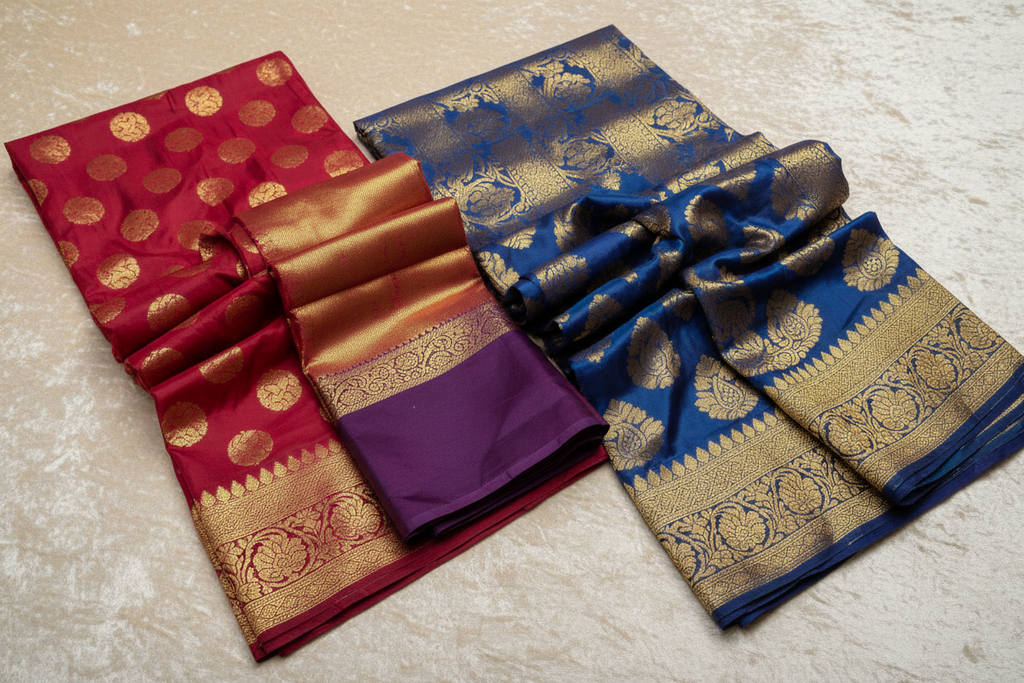
Kanchipuram Silk vs Banarasi Silk: Understanding the Beauty of Two Iconic Weaves
India's textile heritage is filled with remarkable weaving traditions, but few sarees have achieved the cultural significance of Kanchipuram silk and Banarasi silk.
Both are luxurious, traditional Indian sarees. Both are associated with weddings and celebrations. Both are admired for their intricate craftsmanship and rich appearance.
Yet, when you place a Kanchipuram silk saree beside a Banarasi silk saree, their personalities are distinctly different.
Kanchipuram silk is strongly associated with the temple town of Kanchipuram in Tamil Nadu and is particularly famous for its vibrant colours, contrasting borders, traditional motifs and rich zari work.
Banarasi silk, associated with Varanasi in Uttar Pradesh, is celebrated for its intricate brocade weaving, luxurious zari work and motifs influenced by India's long artistic and cultural history.
So, which one is better?
The answer isn't that simple.
Instead of thinking about Kanchipuram silk vs Banarasi silk as a competition, it is more useful to understand what makes each weave special.
In this guide, we'll explore their history, weaving techniques, appearance, motifs, colours, zari work, occasions and styling possibilities so you can make a more informed choice when shopping for your next silk saree.
What Is Kanchipuram Silk?
Kanchipuram silk sarees, also commonly called Kanjivaram silk sarees, originate from Kanchipuram in Tamil Nadu.
The tradition is deeply connected with the region's weaving communities and has become an important part of South Indian wedding and festive culture.
Kanchipuram silk sarees are particularly recognised for their:
- Rich silk texture
- Vibrant colours
- Contrasting borders
- Traditional motifs
- Gold or silver zari
- Elaborate pallus
- Strong, structured drape
One of the most distinctive characteristics of traditional Kanchipuram sarees is the visual relationship between the body, border and pallu.
A saree may feature a bright body colour combined with a contrasting border and an elaborately woven pallu.
This contrast creates the bold and regal appearance for which Kanchipuram silk is known.
What Is Banarasi Silk?
Banarasi silk sarees originate from Varanasi, also known as Banaras, in Uttar Pradesh.
The city has been an important centre of silk weaving for centuries, and Banarasi sarees are particularly famous for their detailed brocade work.
Banarasi silk is often recognised by its:
- Intricate zari work
- Brocade patterns
- Floral motifs
- Buti and butta designs
- Mughal-inspired patterns
- Luxurious texture
- Detailed pallus
- Metallic richness
One of the most recognisable features of Banarasi sarees is the intricate way patterns are incorporated into the fabric.
Traditional designs may feature flowers, leaves, vines and other decorative motifs woven directly into the silk.
The result is a saree that can look highly detailed even when viewed from a distance.
1. The Biggest Difference: Weaving Heritage
The first major difference between Kanchipuram and Banarasi silk is their regional weaving heritage.
Kanchipuram silk developed within the traditional weaving culture of Tamil Nadu and became deeply connected with South Indian ceremonial dressing.
Banarasi silk evolved in Varanasi, where silk weaving developed a distinctive identity based on intricate brocade techniques and elaborate decorative patterns.
This regional influence can be seen in the colours, motifs and overall visual language of each saree.
A Kanchipuram saree can immediately evoke the grandeur of a South Indian wedding.
A Banarasi saree can evoke the elegance and artistry associated with North Indian ceremonial fashion.

2. Kanchipuram Silk Is Known for Its Distinctive Borders
One of the most noticeable features of a Kanchipuram silk saree is its border.
Borders can be broad, elaborate and highly contrasting.
You may find combinations such as:
- Red with green
- Purple with pink
- Royal blue with red
- Green with maroon
- Mustard with magenta
Traditional motifs may also appear throughout the border.
This creates a strong visual separation between the saree body and its edges.
For someone who loves bold traditional sarees, this contrast is one of the biggest attractions of Kanchipuram silk.

3. Banarasi Silk Is Celebrated for Brocade
Banarasi silk has a different visual identity.
Instead of relying primarily on dramatic colour contrasts between the body and border, many Banarasi sarees create their richness through intricate woven patterns.
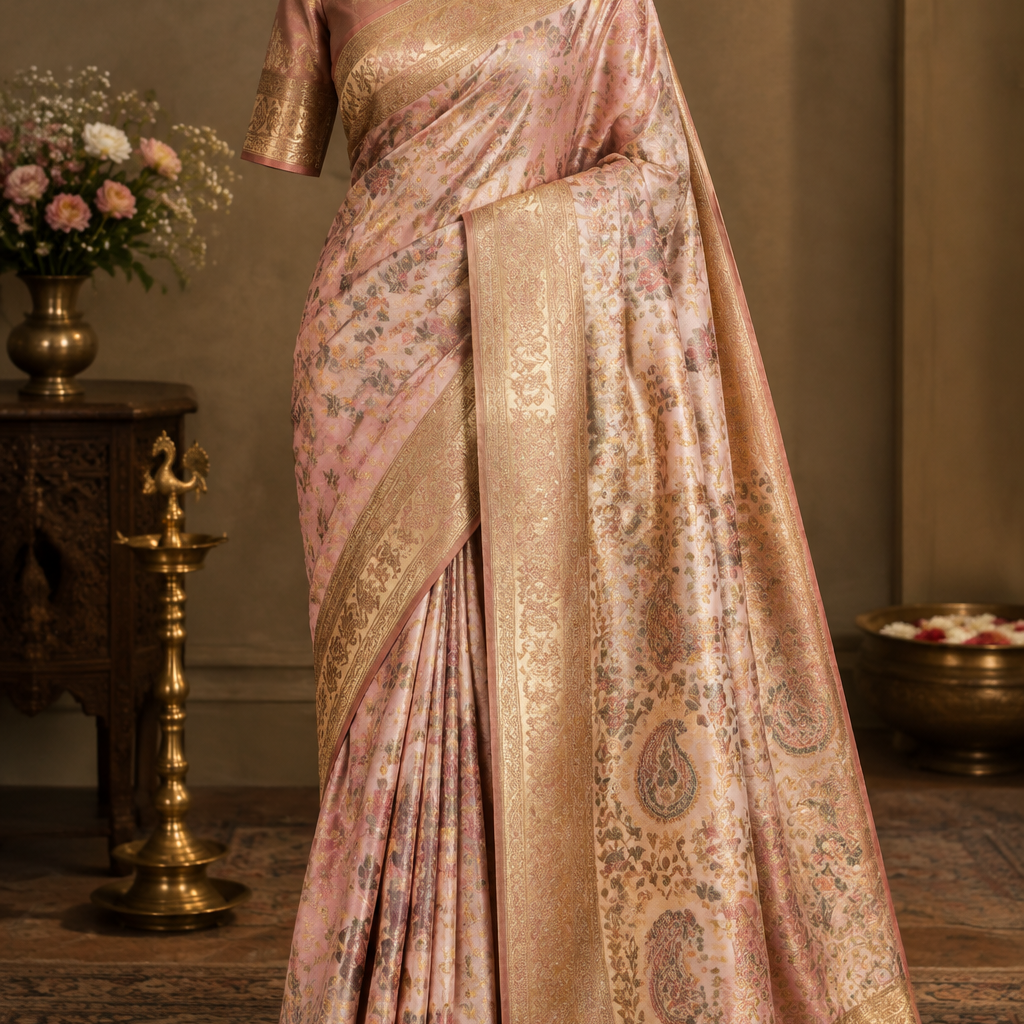
Floral designs, vines, paisley motifs and traditional butis can appear across the body.
The use of zari within these designs creates a luxurious, almost jewel-like surface.
This makes Banarasi silk particularly attractive to women who appreciate detailed patterns and intricate textile artistry.

4. Motifs: Tradition Expressed Through Design
Motifs are an important part of both weaving traditions.
Popular Kanchipuram Silk Motifs
Kanchipuram sarees may feature motifs inspired by:
- Temple architecture
- Peacock designs
- Parrots
- Floral patterns
- Checks
- Stripes
- Rudraksha-inspired motifs
- Traditional geometric designs
These motifs often reflect South Indian cultural and architectural influences.
Popular Banarasi Silk Motifs
Banarasi sarees are known for motifs such as:
- Butis
- Buttas
- Paisleys
- Floral vines
- Jaal patterns
- Kalga and bel designs
- Mughal-inspired floral patterns
These motifs can create anything from a subtle patterned saree to an elaborate all-over brocade design.
5. Zari Work: Both Are Luxurious in Different Ways
Zari is an important feature of both Kanchipuram and Banarasi silk.
However, the way zari contributes to the overall design can differ.
In Kanchipuram silk, zari is often used prominently in borders, pallus and traditional motifs.
The contrast between rich silk colours and shimmering zari creates a distinctly grand appearance.
In Banarasi silk, zari can be woven extensively throughout the saree to create intricate brocade patterns.
The metallic threads become part of the fabric's decorative structure.
This gives Banarasi sarees their characteristic richness and detailed surface.
6. Colour Palette: Bold vs Ornate
Colour is another area where the two traditions can offer different experiences.
Kanchipuram Silk Colours
Kanchipuram sarees are famous for vibrant and bold combinations.
Popular choices include:
- Ruby red
- Emerald green
- Peacock blue
- Royal blue
- Magenta
- Deep purple
- Maroon
- Mustard
- Pink
- Orange
The contrast between colours can be an important part of the saree's visual identity.
Banarasi Silk Colours
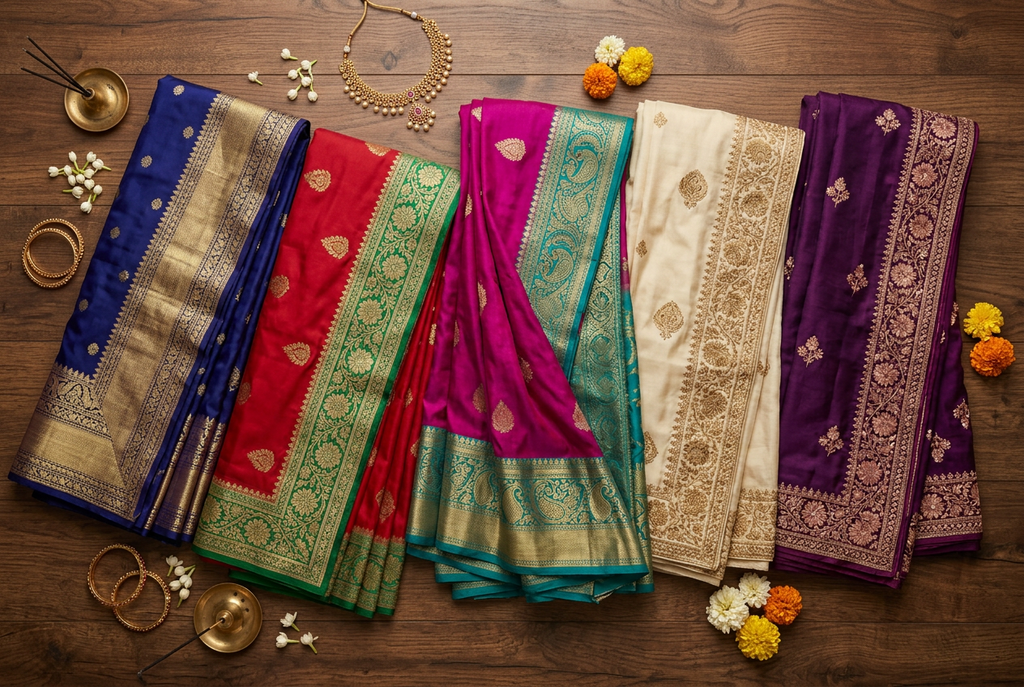
Banarasi sarees are available in an equally impressive range of shades.
These can include:
- Deep red
- Wine
- Burgundy
- Purple
- Royal blue
- Emerald green
- Pink
- Gold
- Beige
- Pastels
- Jewel tones
Because the focus is often on intricate brocade, even a relatively simple colour can appear luxurious when combined with detailed zari weaving.
7. Texture and Drape
The feel of a saree is just as important as its appearance.
Traditional Kanchipuram silk is known for its rich, substantial texture and structured drape.
This gives the saree a strong silhouette, which is one reason it works so beautifully for traditional bridal dressing.
Banarasi silk can also have a rich texture, but its drape and feel vary considerably depending on the specific weave, zari content and design.
Some Banarasi sarees have a soft, fluid drape, while heavily woven varieties can feel more substantial.
When choosing between the two, it is worth considering how you prefer your saree to sit and move.
8. Which Is Better for a Wedding?
This is one of the most common questions.
The answer depends on the wedding tradition and your personal style.
Kanchipuram Silk for Weddings
Kanchipuram silk is an iconic choice for South Indian weddings.
Its rich colours, traditional motifs, contrasting borders and zari work create a grand ceremonial appearance.
For a bride who wants a traditional South Indian bridal look, Kanchipuram silk can be an excellent choice.
Classic bridal colours such as red, maroon, green and pink can create a timeless appearance.
Banarasi Silk for Weddings
Banarasi silk is equally beautiful for weddings, particularly when the desired look is ornate and sophisticated.
A richly woven Banarasi saree can work beautifully for:
- Bridal receptions
- Engagements
- Wedding ceremonies
- Family celebrations
- Festive occasions
The choice ultimately depends on the regional traditions, ceremony and aesthetic you want to create.
Kanchipuram Silk for the Modern Bride
Traditional does not have to mean old-fashioned.
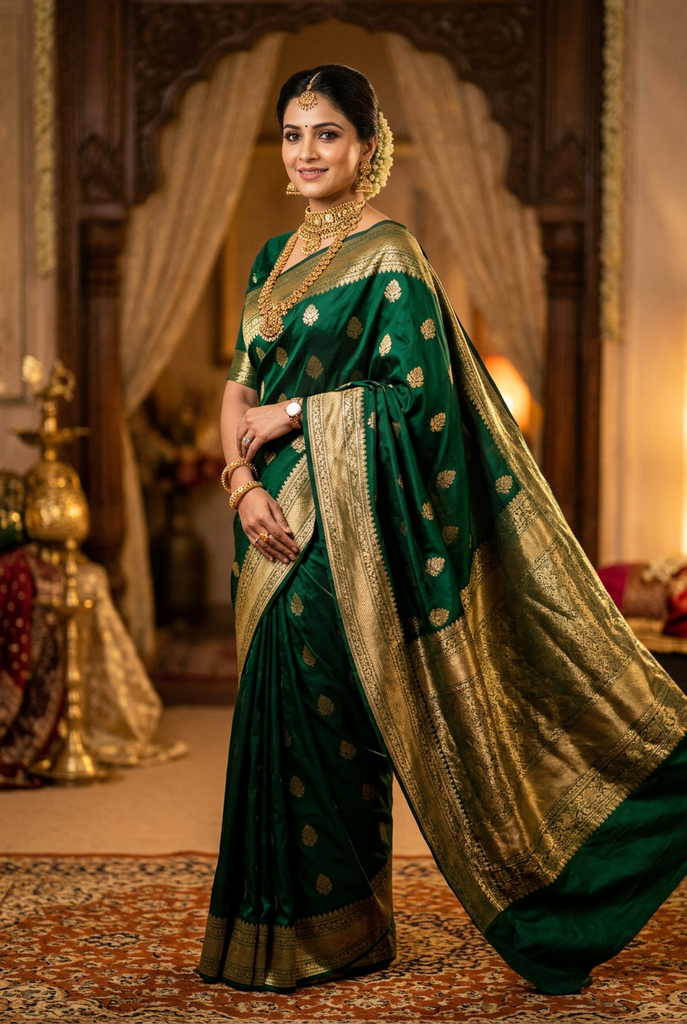
Modern brides are increasingly experimenting with Kanchipuram silk by combining traditional sarees with contemporary styling.
For example, a bride may choose a classic Kanchipuram silk saree and pair it with:
- A designer blouse
- Statement jewellery
- Contemporary makeup
- Modern draping variations
- Minimalist accessories for smaller functions
This creates a balance between heritage and personal style.
A traditional Kanchipuram silk saree can therefore work beautifully for both classic and modern bridal wardrobes.
Banarasi Silk for Contemporary Celebrations
Banarasi silk has also found a strong place in contemporary fashion.
Its intricate patterns can make it suitable for women who want traditional luxury with a sophisticated aesthetic.
A Banarasi saree can be styled with:
- Statement earrings
- Contemporary blouses
- Minimal jewellery
- Metallic accessories
- Modern hairstyles
This flexibility has helped Banarasi silk remain relevant across generations.
Which Silk Saree Is More Traditional?
Both.
This is important to understand.
There is no need to decide that one is "more traditional" than the other.
Kanchipuram silk represents a major South Indian weaving tradition.
Banarasi silk represents a major North Indian weaving tradition.
Each carries generations of craftsmanship and cultural history.
The difference lies in how that heritage is expressed.
Kanchipuram often expresses tradition through vibrant colour contrasts, bold borders, traditional motifs and structured silk.
Banarasi often expresses tradition through intricate brocade, detailed zari and elaborate floral patterns.
Kanchipuram Silk vs Banarasi Silk for Festivals
Both are excellent choices for festivals.
For a traditional South Indian festive appearance, Kanchipuram silk can be an especially natural choice.
Pair it with gold jewellery, jasmine flowers and a classic hairstyle for a timeless festive look.
Banarasi silk can offer a more ornate appearance and works beautifully for festive gatherings where you want a saree with intricate detailing.
For smaller celebrations, lighter Banarasi or Kanchipuram styles can offer elegance without looking overly formal.
Which One Should You Choose?
Instead of asking which saree is better, ask which one suits your occasion and personal style.
Choose Kanchipuram Silk If You Love:
- Bold colours
- Contrasting borders
- Traditional South Indian aesthetics
- Rich zari
- Structured sarees
- Temple-inspired motifs
- Bridal silk sarees
- Classic wedding dressing
Choose Banarasi Silk If You Love:
- Intricate brocade
- Detailed floral patterns
- All-over motifs
- Mughal-inspired designs
- Ornate zari work
- Sophisticated styling
- Rich traditional textures
And if you love both, there is absolutely no reason to choose only one.
A well-curated silk saree wardrobe can celebrate multiple Indian weaving traditions.
How to Identify a Quality Silk Saree
Whether you are buying Kanchipuram silk or Banarasi silk, quality should always be a priority.
Look closely at:
Weaving Quality
The fabric should have a consistent weave and a refined finish.
Zari Work
Examine the zari closely and look for neat, well-executed detailing.
Motifs
Traditional motifs should appear clearly woven and proportionate.
Finish
Check the borders, pallu and overall finishing of the saree.
Authenticity
When purchasing a traditional silk saree, choose a reliable seller and look for appropriate authenticity or certification where applicable.
For buyers specifically looking for genuine silk, understanding the difference between the fabric, weaving tradition and certification can help make a more informed purchase.
How to Style Kanchipuram Silk
For a classic South Indian look:
Saree: Kanchipuram silk with gold zari
Jewellery: Temple jewellery or traditional gold
Hair: Traditional bun with flowers
Blouse: Matching or contrasting silk blouse
Accessories: Bangles, jhumkas and traditional accessories
For a contemporary look:
Saree: Jewel-tone Kanchipuram silk
Jewellery: Statement earrings
Blouse: Contemporary structured blouse
Hair: Sleek bun or modern braid
Accessories: Minimal gold jewellery
How to Style Banarasi Silk
For a classic appearance:
Saree: Rich Banarasi brocade
Jewellery: Gold necklace and earrings
Hair: Traditional bun
Blouse: Matching brocade or silk blouse
For a modern appearance:
Saree: Minimal Banarasi silk
Jewellery: Statement earrings
Blouse: Contemporary neckline
Hair: Sleek hairstyle
Accessories: Minimal accessories
The key with both styles is to let the saree remain the centrepiece.
Why These Two Weaves Continue to Remain Relevant
Fashion changes constantly, but traditional silk sarees continue to survive because they are connected to something deeper than trends.
They represent craftsmanship.
They represent regional identity.
They represent family traditions.
And they often become part of important life moments.
A Kanchipuram saree may be worn by a bride on her wedding day and later preserved as a family heirloom.
A Banarasi saree may become a treasured piece worn for festivals, celebrations and significant occasions.
This emotional value is one of the reasons both weaving traditions continue to remain relevant in modern wardrobes.
Kanchipuram Silk vs Banarasi Silk: Which One Is Right for You?
There is no universal winner.
If you want bold South Indian elegance, Kanchipuram silk may be the perfect choice.
If you want intricate North Indian brocade artistry, Banarasi silk may be more suitable.
If you want a saree with a dramatic border and strong colour contrast, explore Kanchipuram.
If you prefer detailed floral patterns and all-over zari, explore Banarasi.
Most importantly, choose a saree that makes you feel confident and connected to the occasion.
Related post
RECENT POSTS
10.August.2026
