
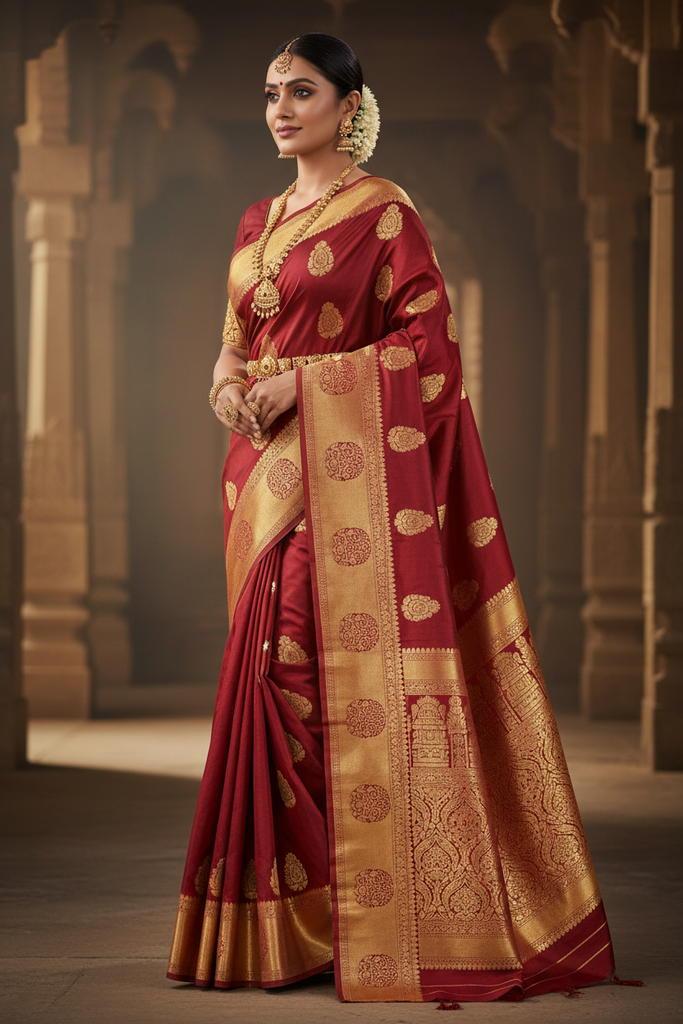
Woven Architecture: Kanchipuram Silk Saree Motifs Inspired by South Indian Temple Sculptures
Introduction: The Translation of Granite into Gold Threads
To walk through a grand medieval temple complex in South India—whether marveling at the towering gopurams that pierce the Tamil Nadu skyline or standing amidst the massive, sculpted stone corridors of the Meenakshi Amman Temple in Madurai—is to experience an immersive masterclass in stone engineering. For centuries, the royal dynasties of the Pallavas, Cholas, Pandyas, and Vijayanagara empires carved their spiritual beliefs, astronomical findings, and protective mythologies directly into the hard local granite. Yet, what many modern fashion enthusiasts do not realize is that this stone architecture shares a direct DNA line with South India's premier luxury textile: the Kanchipuram bridal silk saree.
When the historical silk weavers of Kanchipuram sought patterns to adorn drapes meant for royal courts and sacred wedding mandapams, they did not invent designs out of thin air. Instead, they looked directly at the sacred stone pillars surrounding them, translating stone-carved deities, mythical guardians, and celestial animals into the detailed, woven geometry of pure silk and precious gold wires. In this comprehensive iconographic study, Subhalaya, the premium luxury heritage arm of Theni Anantham Silks and Readymades Private Limited, unpacks the profound Kanchipuram saree motifs meaning. We explore how master handloom weavers turn ancient temple architecture into wearable luxury art, helping the modern bride carry a living piece of history down the wedding aisle.
The Sacred Loom: How Temple Geometries Shaped the Handloom
The connection between Dravidian temple design and premium Kanchipuram weaving goes far beyond surface imagery; it defines the actual physical layout of the saree. A traditional temple complex is built around strict mathematical grid structures dictated by ancient texts like the Shilpa Shastras, which map out pathways balancing heavy weight with open vertical spaces.
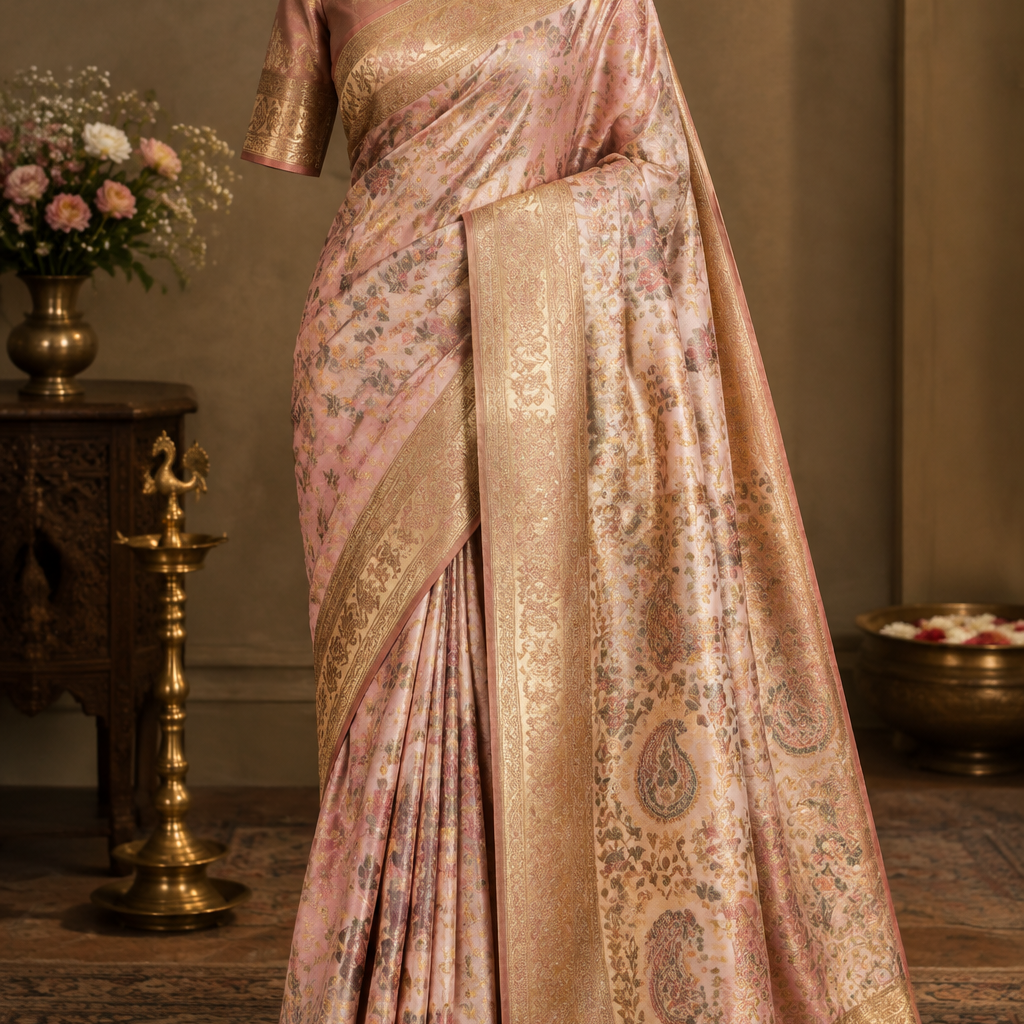
In exactly the same way, an authentic handloomed Kanchipuram bridal pattu is built as a balanced structure of three main parts: the Udal (body), the Karai (border), and the Pallu (decorative end panel). The iconic Korvai interlocking method—where the contrasting border is joined tightly to the main body thread-by-thread using a distinctive step pattern is a direct reflection of the solid, serrated rooflines of historic temple pavilions.

Decoding the Woven Sculptures: Key Motifs and Their Meanings
When you invest in a certified pure zari saree from Subhalaya, the detailed patterns woven into the borders and pallu act as a language of ancient symbols, cosmic meanings, and family blessings. Let us look closely at the central icons derived directly from sacred temple stone carvings:
1. The Yali: The Mythical Divine Guardian
One of the most powerful and recognizable icons found carved into the heavy pillars of Madurai’s historic temple corridors is the Yali. This magnificent mythical beast features the fierce head of a lion, the tusks and trunk of an elephant, the swift body of a horse, and the long tail of a bull. In temple design, Yali statues are placed at entryways and central columns to protect the inner sanctuary from negative cosmic forces.
When woven with pure gold zari into the heavy borders of a Subhalaya bridal saree, the Yali represents divine protection, immense strength, and unmatched grace. It stands as a protective symbol for the modern bride as she steps forward to build her new life home. Because weaving the complex details of the Yali requires extraordinary handloom skill, these patterns are found only in ultra-exclusive, high-ply heirloom sarees.
2. The Gopuram (Mottu): The Ascent of the Soul
The Gopuram motif, often referred to by master weavers as the Mottu (bud) design, is a direct geometric miniature of the towering spires that frame temple entries. Woven as a series of sharp, rising triangular shapes along the border edge using the Korvai technique, this pattern leads the eye vertically along the fabric.
The Gopuram represents spiritual aspiration, absolute structural stability, and the safe connection between earthly life and divine energy. For a family building their wedding trousseau, a temple-border pattu is an indispensable classic that projects a stately, deeply rooted presence that never fades out of style.
"Our weavers do not simply copy historical designs; they use the loom to keep ancient stories alive, turning the solid granite carvings of South India’s great temples into a fluid canvas of pure silk and gold." — The Subhalaya Heritage Archive
3. The Simha: The Sovereign Lion of Courage
Carved heavily into the stone bases of Pallava dynasty monuments, the Simha or royal lion stands tall as a symbol of absolute authority, truth, and fearlessness. In the woven language of Kanchipuram silks, the lion motif is integrated smoothly into the borders or repeated as fine circular medallions (known as Buttas) across the main body.
The Simha motif speaks directly to the bride of independent character and elite status, serving as a reminder of inner strength and dignity. It pairs beautifully with heavy, traditional antique gold chokers, reinforcing a royal look that commands respect across any high-profile family gathering.
4. The Annapakshi: The Divine Swan of Discernment
A constant presence in stone panels and decorative ceilings across South India is the Annapakshi, a mythical white swan described in ancient literature as possessing the divine ability to separate pure milk from water. This elegant bird is a celebrated symbol of intellectual clarity, grace, and spiritual focus.
Woven with fine metallic threads across the pallu, the Annapakshi brings a soft, flowing, and deeply feminine charm to the garment. For a mother choosing a saree or a bride preparing her trousseau, it represents the wisdom and poise needed to navigate life's journeys beautifully.
5. The Kamalam: The Lotus of Unfolding Purity
From the holy water tanks to the central carvings on ceiling panels, the Kamalam (lotus) is a central symbol across Indian art. Representing purity rising above earthly mud, spiritual growth, and the blessings of Goddess Lakshmi, the lotus vine pattern is often woven as a continuous border layout (known as the Kodi design).
This motif introduces a soft, organic texture to the dense silk fabric, making it an excellent choice for brides selecting contemporary pastel tones or lightweight soft silks for daytime engagement rituals.

Styling Temple Icons for High-Society Galas
Wearing a saree rich in temple iconography requires a thoughtful approach to styling to ensure the historical details remain the star of your look. Our expert bridal concierges suggest these three styling rules:
-
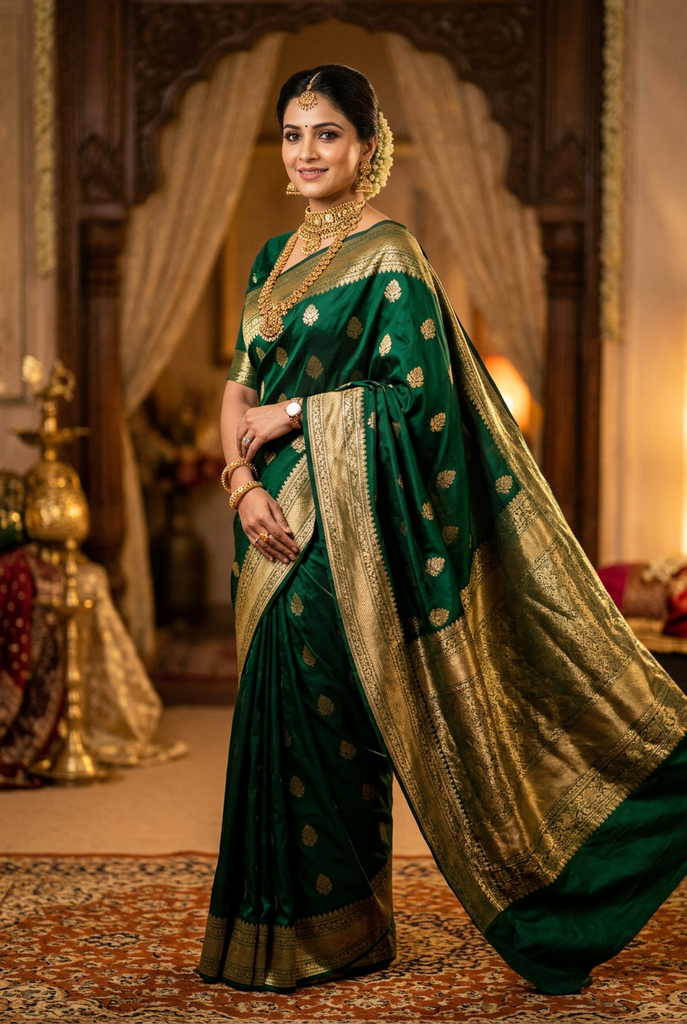
Antique Jewelry Harmony: Pair heavy temple-motif sarees with traditional middle-tone antique gold jewelry or fine Nakshi work. A necklace featuring detailed carvings of deities or historical patterns coordinates perfectly with the Yali and Gopuram weaves, creating a unified look of timeless luxury.
-
Clean Blouse Silhouettes: Avoid busy, all-over embroidery patterns on your blouse that can distract from the saree's detailed borders. Opt instead for a classic elbow-length sleeve blouse that showcases a clean section of the saree's raw border, keeping the overall silhouette balanced and elegant.
-
Traditional Draping Focus: Use the classic Nivi drape with crisp, narrow shoulder pleats. This arrangement displays the continuous row of temple border icons cleanly, ensuring the craftsmanship is clearly visible as you move through your celebrations.
The Subhalaya Standard: Authenticity You Can Feel
The beauty of temple-inspired motifs relies completely on the crispness and clarity of the weave. Inferior powerloom lookalikes or synthetic fabrics woven with cheap copper wire lack the structural sharpness needed to define these intricate designs, causing the patterns to look blurred and lose their visual weight over time.
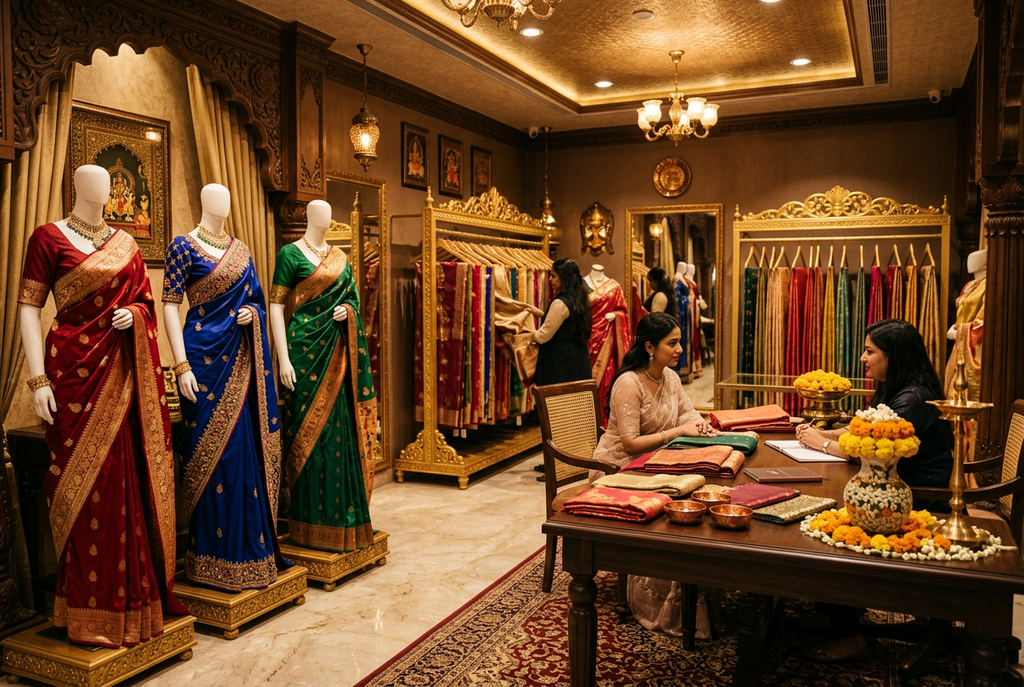
Backed by the multi-decade heritage and trusted consumer service of Theni Anantham Silks and Readymades Private Limited, Subhalaya guarantees pristine fabric integrity. Every single saree in our exclusive heritage collections is independently Silk Mark Certified, ensuring it is woven from 100% pure natural mulberry silk and authentic precious-metal zari. Our luxury viewing suites across Madurai, Theni, and Dindigul provide a personalized, culturally rich environment where families can explore the deep history and fine details of these certified works of art in complete comfort.

Frequently Asked Questions (FAQ)
1. What is the traditional meaning behind the Yali motif in a Kanchipuram saree?
The Yali is a mythical guardian beast combining features of a lion, elephant, and horse, found carved into South Indian temple pillars. Woven into a saree border, it represents divine protection, immense strength, and vigilance, serving as a powerful blessing for a bride's new life home.
2. How does the Korvai technique relate to temple architecture?
The Korvai technique involves interlocking the separate threads of the saree's body and border by hand on a pit loom. This process creates a distinctive, stepped jagged pattern (resembling temple spires or gopurams) along the junction line, mirroring the solid rooflines of historic temple pavilions.
3. Why are temple motifs more clearly defined in pure zari sarees compared to synthetic replicas?
Pure zari is made from a real silk core wrapped in fine silver and coated in 24-karat gold, which allows the threads to bend smoothly and tightly on the loom. This flexibility gives handloom weavers the precision needed to weave highly detailed, sharp patterns that synthetic plastic wires simply cannot replicate.
4. Which color palettes work best to highlight traditional temple borders?
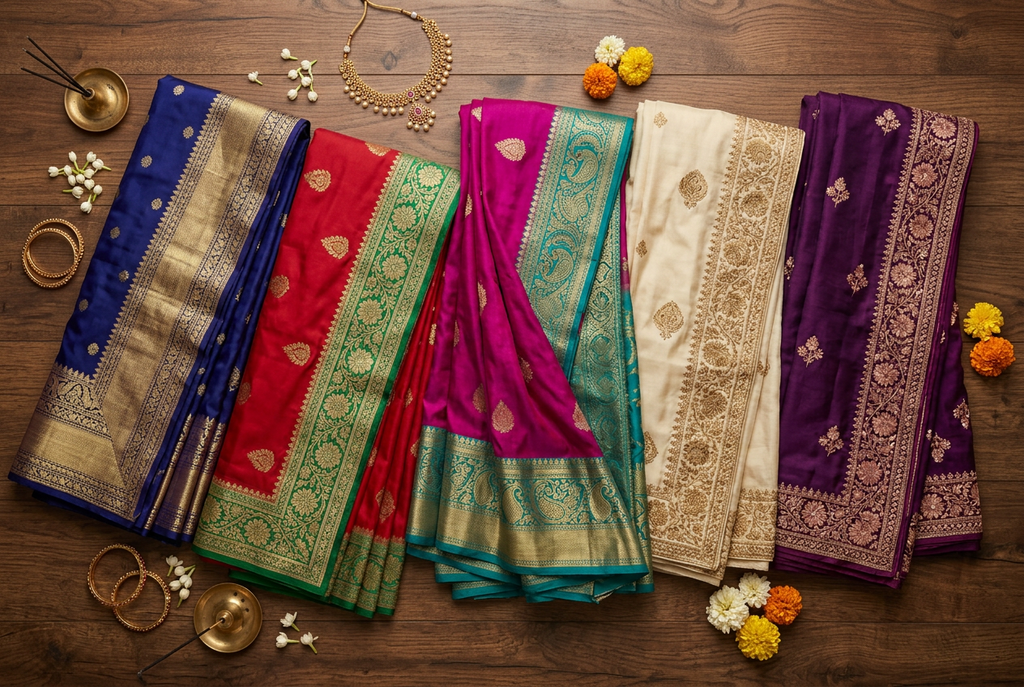
Deep, saturated classic tones like Araku crimson, rich emerald green, mustard yellow, and royal MS blue provide a stunning contrast that makes gold zari temple motifs stand out brilliantly, making them ideal choices for main wedding rituals.
5. How should I care for a heavy heritage saree featuring detailed gold motifs?
Wrap the saree inside-out in a clean, breathable cotton or muslin sleeve bag, and store it flat on a wooden shelf away from direct moisture. Take it out every few months to air it out in a shaded indoor space and refold it along fresh lines to protect the delicate metallic threads.
Conclusion: Carrying Heritage Into a New Future
Stepping down the wedding aisle wearing a Subhalaya saree rich in temple iconography is a beautiful way to show respect for your cultural roots, honor timeless art, and make an elegant style statement. By understanding the deep history behind the Yali, Gopuram, and Annapakshi motifs, you transform your bridal drape from a beautiful outfit into a living piece of family history.
True fashion luxury stands firmly on pristine quality and deep-rooted trust. We invite you to visit an exclusive Subhalaya showroom today—where the multi-decade legacy and quality dedication of Theni Anantham helps you select a certified handloomed masterpiece that you will cherish forever.
Related post
RECENT POSTS
10.August.2026
